
Radon in Hastings, Minnesota: History, Risks, and Homeowner Insights
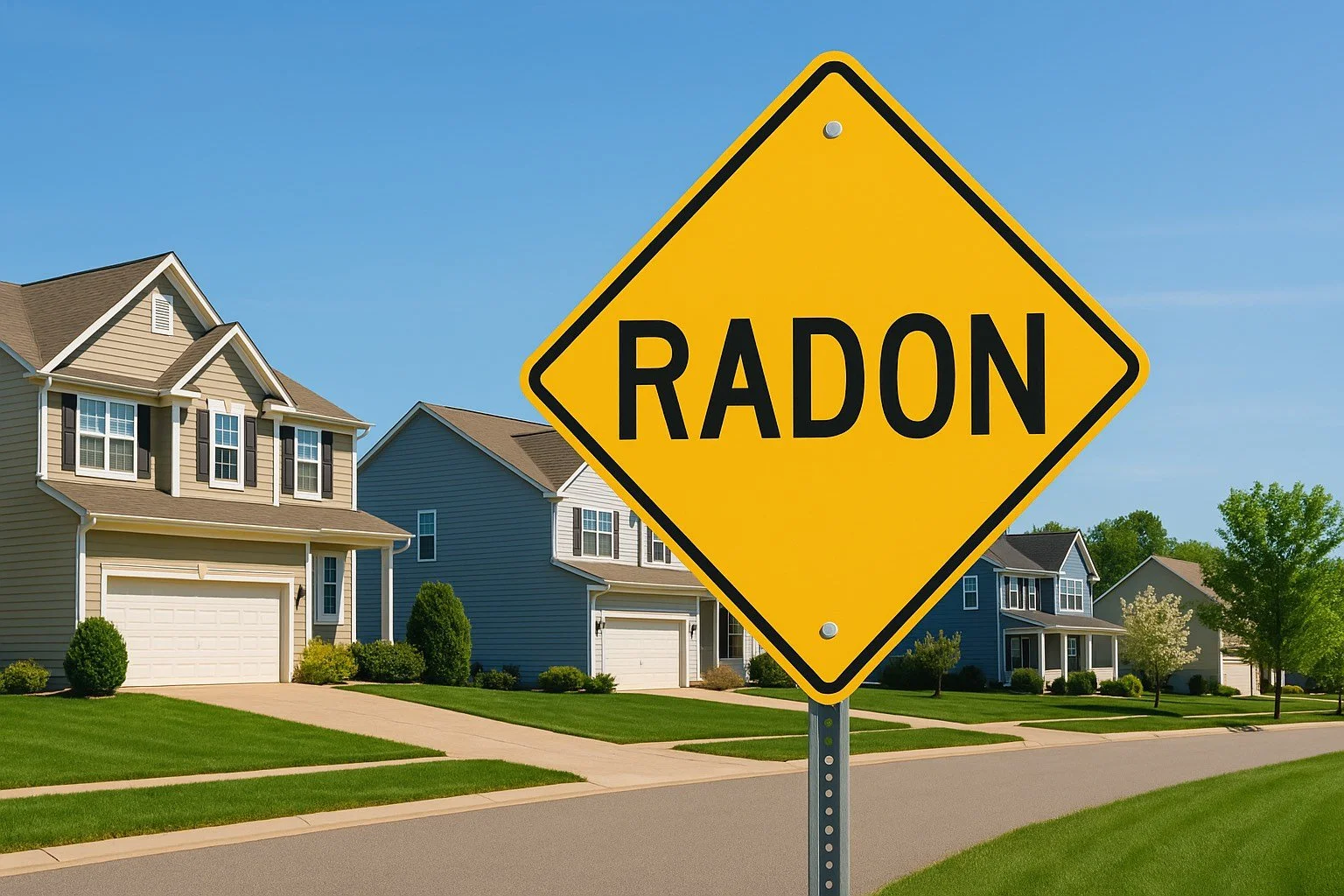
If you’re considering the purchase or sale of a home in Hastings, or in any other location throughout Minnesota, it is essential that radon testing and awareness should be included on your checklist.
When showing homes around Hastings, I often get questions about radon – that invisible gas you can’t see, smell, or taste. “Is it really a big deal?” my clients ask. In a word: yes! Radon is a naturally occurring radioactive gas that can seep into our homes from the ground, and it’s a major home health concern. In fact, radon is the leading cause of lung cancer among non-smokers in America. Here in Minnesota, our unique geology and long winters mean radon tends to accumulate to higher levels than the national average. So, whether you’re a homebuyer, a seller, or a homeowner in Hastings, understanding radon is key to keeping your family safe and your real estate transaction smooth. In this post, we’ll break down what radon is, trace how awareness (and laws) about radon have changed over time, and explain what Minnesota radon laws mean for you. We’ll also dive into local statistics – including some eye-opening numbers for Hastings and Dakota County – and discuss how radon impacts home inspections, real estate disclosures, and home air quality. And of course, we’ll share tips on radon testing and recommend trusted local radon mitigation professionals. Let’s dive into the radon story and learn how to breathe easy in our Hastings homes.
What Exactly Is Radon, and Why Should Hastings Homeowners Care?
Radon is a colorless, odorless, tasteless radioactive gas that comes from the natural decay of uranium in soil and rocks. In other words, it’s naturally occurring – you might say it’s Mother Nature’s hidden houseguest. Radon gas seeps up through the ground and can enter buildings through tiny cracks and openings in the foundation, walls, or around pipes. Every home in Hastings (and anywhere else) could have radon, whether it’s old or new, with or without a basement. Once inside, radon can accumulate in the air we breathe. The trouble is, as radon decays, it releases radioactive particles. When we inhale those particles, they can get trapped in our lungs and damage lung tissue over time. Long-term exposure to high radon levels can lead to lung cancer. In fact, scientists estimate radon causes about 21,000 lung cancer deaths in the U.S. each year – it’s the #1 cause of lung cancer in non-smokers and second only to smoking for smokers. This is serious stuff for something you can’t even see!
So why is radon especially important here in Hastings and Minnesota? Our state’s geology (lots of uranium in the soil from ancient glaciers) and our cold climate (we seal up our homes tight in winter) create a perfect storm for higher indoor radon levels. The average radon level in Minnesota homes is 4.2 pCi/L, over three times the U.S. average of 1.3 pCi/L. (Radon is measured in picocuries per liter of air, or pCi/L – and as we’ll discuss, anything above 4.0 pCi/L is considered a red flag by the EPA.) More than 40% of Minnesota homes have radon levels above the EPA’s “action level” of 4 pCi/L. That means nearly half of our homes contain radon concentrations that pose a significant health risk.
Did you know? About 2 out of 5 homes in Dakota County have high radon levels (above 4.0 pCi/L). This graphic from Dakota County Public Health highlights how common elevated radon is in our area. Statewide, roughly 40% of Minnesota homes test above the EPA’s recommended radon action level. Radon problems aren’t isolated to a few homes – it’s a widespread issue, which is why testing is so important.
The bottom line is that radon matters for Hastings homeowners because it’s both common and dangerous. The only way to know if you have a radon issue is to test your home’s air. If high levels are found, radon mitigation systems can fix the problem and dramatically reduce the radon (often by 80-99%). But if we ignore radon, we’re rolling the dice with our health. As a community-focused realtor, I want all our neighbors to know about this hazard – after all, keeping home air quality safe is a big part of enjoying your Hastings home. Now that we’ve covered the basics of what radon is and why you should care, let’s look at how radon was discovered and how awareness has evolved over time, leading up to the laws and practices we have today.
A Brief History of Radon Awareness (From Mines to Minnesota Homes)
It might surprise you to learn that radon’s dangers have been known for quite a long time – but awareness among homeowners took a while to catch up. Here’s a brief timeline of radon awareness and regulations, highlighting how we got to where we are today:
16th – 20th Century (Early Clues): For centuries, miners in Europe noticed a mysterious “wasting disease” (lung cancer) among uranium miners. They didn’t know it, but radon gas in the mines was the culprit. Radon was formally identified as an element in 1900, but for a long time it was mostly considered a mine or occupational hazard.
1984 – The Wake-Up Call: The risk of radon in homes came to national attention thanks to an accident – known as the Watras incident. In December 1984, a nuclear plant worker named Stanley Watras in Pennsylvania kept setting off radiation alarms on his way IN to work. The source turned out to be insanely high radon levels in his house! When experts tested his home, they found the highest indoor radioactivity ever recorded – about 1,000 times higher than safe levels. The family had to evacuate their home for months while a radon mitigation system was installed. This bizarre discovery just months before the Chernobyl disaster was a “eureka” moment that revealed radon gas can reach dangerous levels in ordinary homes. The Watras case got widespread media coverage and alerted the public and government agencies to radon’s lurking threat in our basements and living rooms.
1986 – 1988 – Federal Action: Responding to the growing evidence, the U.S. Congress jumped into action. In 1986, they passed the Radon Gas and Indoor Air Quality Research Act, directing the EPA to study indoor air pollutants (with radon a top priority). Two years later, in October 1988, Congress enacted the Indoor Radon Abatement Act. This law set an ambitious long-term goal: to make indoor air as radon-free as outdoor air (outdoor air typically has ~0.4 pCi/L of radon). It also provided funding for state radon programs, surveys of schools and federal buildings, training for radon professionals, public education (like developing the EPA’s “Citizen’s Guide to Radon”), and even model building standards. The late 1980s also saw the EPA launch outreach campaigns encouraging Americans to test their homes, and the first radon test kits became widely available.
1990s – Early 2000s – Building Codes and State Programs: During the 1990s, many states (including Minnesota) ramped up radon awareness programs, often aided by EPA grants. Minnesota’s Department of Health began tracking radon levels and promoting testing. The EPA’s map of radon zones identified Minnesota (and Dakota County in particular) as Zone 1 – meaning high potential for indoor radon above 4 pCi/L. In the 1990s, radon-resistant construction techniques started gaining traction. By 2009, Minnesota took a big step by updating the state building code: all new homes built after June 2009 must include passive radon-resistant featureshennepin.us. This means builders install things like a plastic barrier beneath the slab, seal foundation cracks, and put in a vertical vent pipe through the house. (The passive system alone doesn’t have a fan, but it makes it easy to add one later.) This requirement was huge – it ensures new Hastings homes have a head start in keeping radon out. However, if you own a home built before 2009 (which is a lot of our housing stock), it likely wasn’t built with radon resistance in mind, so testing is especially important.
2014 – Minnesota Radon Awareness Act:** Fast forward to January 1, 2014 – the day Minnesota’s Radon Awareness Act went into effect. This law directly affects home sellers and buyers. Basically, it made radon an essential part of any real estate transaction. Sellers of residential property in Minnesota are now required to disclose in writing any knowledge they have about radon in the home. That includes whether the home has ever been tested for radon, the results of any tests, and whether a radon mitigation system is in place. Sellers don’t have to test for radon if they haven’t, but they do have to provide a written Radon Warning Statement and an MDH (Minnesota Department of Health) pamphlet to the buyer. The idea is to ensure no homebuyer goes into a sale unaware of radon. This was a big win for homebuyer knowledge and helped make radon part of the standard due diligence in Minnesota home sales.
2015 – 2019 – Licensing of Radon Professionals: In 2015, Minnesota passed the Radon Licensing Act (Minn. Stat. 144.4961), which set up licensing requirements for radon professionals. By January 2019, anyone who conducts radon testing or mitigation professionally in Minnesota must be state licensed. This means home inspectors offering radon testing, and contractors installing radon mitigation systems, have to take training and follow approved protocols. For consumers, this adds a layer of protection – when you hire a radon tester or mitigator in Hastings, you can check that they’re MDH licensed and know their stuff. It also standardized testing methods to ensure more accurate and consistent results across the state.
Today – Ongoing Efforts: Today, radon awareness is higher than ever, yet there’s still work to do. The EPA and Surgeon General urge everyone to test their homes, and January is National Radon Action Month. Minnesota’s health officials still remind us that only about 1-2% of homes are tested each year – too low, given that 40% have high radon. Organizations like the American Lung Association are pushing for more testing, noting that in 2018, an estimated 638 lung cancer cases in Minnesota were radon-induced (about 18% of all lung cancers in the state that year). The good news is that radon problems are entirely fixable, and local programs are stepping up to help (as we’ll see in a moment with Dakota County’s initiatives).
In summary, what started as an obscure mining hazard has become a well-documented indoor air quality issue that every Hastings homeowner should know about. Over time, research and real-life cases prompted our government to set safety guidelines and laws to protect people. Minnesota in particular has become a leader in radon awareness – requiring new homes to be built radon-resistant, mandating radon disclosure in real estate, and licensing the pros who deal with radon. This historical perspective shows that while radon is nothing new, our ability to detect and reduce it has never been better. Next, let’s discuss what radon risks look like today, especially for us in Hastings and Dakota County, and what the future might hold.
Radon Risks Today and Tomorrow: Why It’s Still a Hot Topic
Even with all this awareness, you might wonder: “If radon has been on the radar for decades, are we winning the battle? What are the current and future risks?” The reality is that radon remains a current hazard – especially in Minnesota – and staying vigilant is crucial. Here’s the state of radon today, and why it will continue to matter going forward:
Minnesota’s Radon Report Card: Unfortunately, Minnesota gets a less-than-stellar grade when it comes to radon prevalence. According to the American Lung Association, 41.7% of radon tests in Minnesota come out at or above the EPA action level of 4 pCi/L. That ranks Minnesota 42nd among states (where 1st would be the best/lowest radon rates). In plain English: we have one of the higher overall radon levels in the nation. Our corner of the state is no exception. Hastings is in Dakota County, which, like most of our metro area, sits in EPA Zone 1 – the highest risk category for radon (predicted average indoor levels over 4 pCi/L). Even within Dakota County, radon levels can vary, but it’s common to find elevated readings. Many Hastings homeowners who test are surprised to find results in the 5, 10, even 15+ pCi/L range. (For reference, a home at 10 pCi/L has about 10 times the radon concentration the EPA ideally wants, and if you lived there long-term it’d be like smoking a pack of cigarettes a day in terms of lung cancer risk!)
Local Stats and Case Studies: While we don’t have an official city-by-city radon registry for every home, we do have some telling data. Neighbors have reported radon tests in Hastings with levels around 7 to 10 pCi/L. Dakota County’s public health department estimates about 2 in 5 homes here have high radon (mirroring the state average) – essentially, a coin flip as to whether any given house has an issue. A sobering Minnesota Department of Health analysis noted that in 2018, 17.8% of lung cancer cases in Minnesota were linked to radon exposure. That means hundreds of our friends and family members’ cancer diagnoses might have been prevented with lower radon exposure. On a community level, these statistics have spurred action. In fact, in 2024 the City of Hastings partnered with the Dakota County Community Development Agency (CDA) on a new Radon Mitigation Grant Program lf.hastingsmn.govlf.hastingsmn.gov. This program offers free radon test kits to participants in a local home improvement loan program and provides grants to install radon mitigation systems for qualifying homeowners (those with lower incomes who often live in older homes) lf.hastingsmn.gov. The initiative recognizes that fixing radon in older houses can be a matter of public health equity – and it’s great to see our community investing to reduce future lung cancer risk for residents. It’s like a case study in proactive radon risk reduction at the local level.
The Future – Why Radon Still Matters: Looking ahead, radon will continue to be relevant for a few reasons. First, our housing stock isn’t turning over overnight – millions of existing homes (including most built before 2009 in Minnesota) still need to be tested and, if high, mitigated. As more people finish basements or energy-seal their homes for efficiency, testing for radon will be an important check, since changes in a home can affect radon levels. Climate change could even play a role: if we have more extreme weather or longer heating seasons, homes might be closed up more, potentially affecting radon buildup. Additionally, as awareness grows, buyers will likely demand radon-safe homes even more. We might see future building codes go beyond passive systems to require active radon systems (with fans) in new homes, or even lower action levels if technology improves. The EPA action level is 4 pCi/L, but they and the World Health Organization actually recommend considering action at levels as low as 2.0 pCi/L because any radon carries some risk. Some experts envision a future where real estate listings include radon levels just like they list square footage or year built – making it a standard metric for home quality.
The takeaway is that radon isn’t yesterday’s problem – it’s a here-and-now issue and a future concern if we don’t address it. The risks in Hastings and throughout Minnesota remain significant, but they’re also completely addressable. As we often say in public health, radon-induced lung cancer is 100% preventable if we take the right steps. And that brings us to how radon plays into one of the biggest steps in homeownership: the home inspection and sale process. Let’s talk about radon in the context of buying or selling a home in Hastings, and what our Minnesota radon laws mean for you when you’re on the market.
Radon in Real Estate: Home Inspections, Disclosures, and Your Next Purchase
If you’re buying or selling a home in Hastings (or anywhere in Minnesota), radon should be on your checklist. Here’s how radon affects home inspections and real estate transactions – and why being proactive can save you headaches and protect your investment:
Homebuyers – Get That Radon Test: In Minnesota, the Department of Health strongly recommends that all home buyers have an indoor radon test done before closing on a home. As a buyer, you generally have the right to inspect the home, and radon testing is commonly included in professional home inspection services (often as an add-on service for a fee). Typically, the buyer will hire a licensed home inspector who sets up a radon test device in the home (or multiple devices, if the house has multiple foundation types). The test is usually a 2-4 day closed-house test for real estate purposes. If the results come back high – above 4.0 pCi/L – it’s not a deal-breaker! High radon is very common and there’s a well-established fix. What it does mean is you, as the buyer, can negotiate with the seller on next steps. In many cases, buyers ask the seller to either install a radon mitigation system before closing or to provide a credit or concession (often around $1,200–$2,000, which is the typical cost of a radon mitigation system) so the buyer can install one after closing. Sellers in Minnesota are used to this – it’s a normal part of the process now. In fact, savvy sellers often test their home before listing so they can say “Look, I already tested and if it was high I took care of it.” If a mitigation system is already in place, buyers should still test to ensure it’s working properly and see the current level. The key point: if you’re buying, don’t skip the radon test. It’s inexpensive (some sellers even provide test results upfront) and it ensures you won’t walk into a home with an unwelcome radioactive surprise.
Home Sellers – Disclose, Disclose, Disclose: Under the Minnesota Radon Awareness Act, sellers have specific obligations. When you fill out that stack of disclosure forms for your Hastings home, one of them will be a radon disclosure. You’ll have to indicate if your home has been tested for radon, and if so, what the results were and whether you’ve done anything about it. You’ll also attach the state’s official Radon Warning Statement, which basically warns buyers that Minnesota homes may have high radon and that it’s a health risk, etc., and advises them to test. Additionally, sellers must give buyers the Minnesota Department of Health’s pamphlet “Radon in Real Estate Transactions” (or similar). As a seller, you are not required to do a radon test or mitigation if you haven’t – you just can’t hide known information. My advice to sellers is to consider testing before listing anyway. Why? Two reasons: (1) If the test comes back low, you now have a selling point (“tested low for radon, no issues found”) which can reassure buyers. (2) If it comes back high (remember about 40% do in MN), you have the opportunity to proactively install a mitigation system, on your timeline and terms, rather than having it become a last-minute negotiation or emergency during escrow. A house with a brand-new radon mitigation system is actually more attractive to buyers, because it signals the home’s air is safe and that you took care of an important health item. Think of a radon system like a selling feature – “This home already has a radon reduction system in place for peace of mind.” It can set your listing apart. Plus, mitigation isn’t terribly expensive relative to other home upgrades (often comparable to the cost of a new appliance or minor remodel), and there are many qualified contractors around. In short, as a seller, doing the radon homework up front can smooth your sale and protect you from any liability down the road. Failing to disclose something or refusing a reasonable radon remedy can risk the sale falling apart, especially since buyers take radon seriously these days.
Real Estate Agents – Community Educators: I’ll put my Realtor hat on for a moment – those of us in real estate have also adapted to make radon a routine discussion. InMotion Realty, for example, has made radon education part of our client service. We remind sellers about the disclosure law, and we advise buyers to test during their inspection period. It’s not about scaring anyone; it’s about being transparent and proactive. Since radon is so common here in Hastings, it’s simply part of buying a home, like checking for radon is as normal as checking the foundation or roof. I often share stories with clients: for instance, I had buyers fall in love with a charming older home near the river; the radon test came back around 12 pCi/L. We negotiated, the seller installed a mitigation system (which cost about $1,500), and post-mitigation tests dropped it to under 2. The buyers moved in with no worries, and the seller was happy to have closed the deal. It was a win-win, and now that home has safe air and a new fan system quietly whirring away in the basement. These kinds of outcomes are common and entirely achievable.
Minnesota Radon Laws and You: To recap the key rules: Minnesota requires disclosure of radon information in home sales, and licenses radon professionals to ensure quality testing and mitigation. The state does not require every home to be tested or fixed – that’s still up to owners and buyers. But by making radon part of the official process, Minnesota has effectively made radon impossible to ignore in real estate. As a buyer, you should feel empowered by these laws: you have the right to know a home’s radon status and to test for yourself. As a seller, these laws are your friend too: follow them, and you provide a better buyer experience and reduce your legal risk. I always tell clients: knowledge is power. Knowing about radon in a home – whether it’s there or not – allows everyone to make informed decisions and simple fixes.
Home Health and Peace of Mind: Beyond the transaction, remember that a house is more than an investment – it’s where your family eats, sleeps, and plays. Home air quality has a huge impact on daily life. If you could prevent something in your home from causing harm, wouldn’t you? That’s why radon testing and mitigation are also about peace of mind. I’ve had clients test their homes and sleep better at night knowing the results – whether it came back low (great, nothing to do!) or high (they got it fixed and then could rest easy). Given how easy testing is and how effective radon mitigation can be, addressing radon is considered a standard part of maintaining a healthy home nowadays. It’s similar to installing smoke detectors or carbon monoxide alarms – another invisible threat we learned to guard against. Radon is just one more item to add to the list of home safety measures.
By treating radon with the same diligence as any other home inspection item, you ensure that your home – or the home you’re buying – is a place where you can truly breathe easy. Now that we’ve covered the role of radon in real estate, let’s get practical: how do you test for radon, what do you do if you have it, and who can help? Especially here in Hastings and Minnesota, there are great resources to make the process straightforward. In the next section, we’ll go over testing methods, mitigation solutions, and recommend some local professionals and programs you can turn to.
Testing and Mitigating Radon: Practical Tips and Local Resources
You might be wondering at this point, “Alright, I’m convinced radon is important – so how do I actually test for it or fix it?” The good news is radon testing is simple and affordable, and fixing (mitigating) radon is a well-established process often completed in just a day. Here’s what you need to know, along with local Hastings/Minnesota resources to help you out:
How to Test Your Home for Radon: There are two main routes – do-it-yourself kits or professional testing. DIY radon test kits are readily available at hardware stores, home improvement centers, or online. They are usually either short-term tests (2-7 days) or long-term tests (90 days to 1 year). For a quick snapshot, short-term tests are common. You simply open the kit (often a charcoal canister or similar device) and leave it in the lowest lived-in level of your home (like the basement) for a few days, then seal it up and mail it to a lab. In a week or two, you get results. These kits are inexpensive – often $10 to $25 – and some even include the lab analysis fee in that cost. Dakota County Public Health has, in the past, offered free short-term radon test kits to residents, especially during Radon Action Month (January). It’s worth checking if the county or Minnesota Department of Health (MDH) has any current free kit programs. You can call the Dakota County Public Health department (952-891-7500) to inquire, or pick up a kit at their service centers when available. Alternatively, many of us local real estate folks keep test kits on hand for our clients – I’ve handed out quite a few at open houses as a little “bonus” for visitors!
If you prefer professional testing, particularly for a real estate transaction or for a more detailed report, hire a licensed radon measurement professional. These are often home inspectors or environmental testing companies. They use more sophisticated devices (like continuous radon monitors) that can give hour-by-hour readings over a couple days. Professional tests might cost around $100-200, but they come with the expertise and often a detailed report. Since as of 2019 radon testers must be state licensed in MN, you can trust that a pro will follow protocols correctly – closed-house conditions, proper device placement, etc. The Minnesota Department of Health’s website has a “Find a Radon Measurement Professional” search tool where you can locate licensed testers by region. In Hastings, you’ll find numerous qualified inspectors who can perform a radon test, and many will do it as part of a broader home inspection package.
Understanding Your Test Results: Radon levels are measured in pCi/L. The key numbers to remember: 4.0 pCi/L is the EPA’s action guideline – if you’re at or above this, plan to mitigate. However, even 2.0 pCi/L and above isn’t completely risk-free, and many people choose to fix if they’re in the 2-4 range too. There’s no “safe” level of radon, but the lower, the better. Don’t panic if your number is high – radon levels fluctuate seasonally and day-to-day. A short-term test is a snapshot; if it comes back around 4, you might do a follow-up long-term test to confirm, or just go ahead and mitigate for peace of mind. If you get a sky-high number (like 10, 20 or more), definitely take action. But keep in perspective: a high radon test is fixable.
How Radon Mitigation Works: The most common radon reduction method for homes is called sub-slab depressurization – which is a fancy way to say we suck the radon from under your house and send it outside. A radon mitigation contractor will typically install a system that includes a PVC pipe going through your foundation floor (or attached to your sump pit lid) into the soil or gravel below, and a quiet electric radon fan that continuously pulls air (and radon) from under the house and vents it above the roof line outside. By creating a slight vacuum under the house, the system prevents radon from seeping in – it goes up the pipe instead. Mitigation systems also involve sealing large cracks in the foundation where possible to make the suction more effective. The result is often dramatic: even very high radon levels can usually be brought down well below 4 pCi/L. Most homes in our area can be mitigated in just a few hours work by a professional. You’ll see a plastic pipe running vertically in your basement or along the exterior, with a fan (often in the attic or outside) – that’s about it. These fans are about as loud as a bathroom vent fan, and you’ll hardly notice it. They run continuously and cost only a few dollars a month in electricity. Importantly, a mitigation system is not “set and forget” forever – you should re-test your home after installation and then every few years to ensure the system is still doing its job (fans can wear out after ~10-15 years). But maintenance is minimal.
Cost of Mitigation: We touched on this earlier, but to reiterate: fixing radon is not hugely expensive. In Minnesota, the typical radon mitigation system costs between $1,200 and $2,500, with an average around $1,500. Factors that affect cost include your home’s size, foundation type(s), and how easy it is to run the vent pipe. Even at the higher end, compare that to other home fixes – it’s like the cost of a minor basement remodeling or a big appliance. Some simple cases can be under $1,000. The peace of mind it brings is priceless. And if you’re installing one as a result of a home sale negotiation, often the other party is contributing financially (either the seller pays for it or the buyer gets credit to cover it). In Hastings, there are even grant programs as mentioned (for example, income-qualified homeowners may get it paid for through the new Dakota County CDA initiative) lf.hastingsmn.gov. Also, remember that all new homes since 2009 are built with a passive radon system already in place hennepin.us. If your new-ish home tests high, adding an active fan to that existing vent pipe might be all you need – a few hundred bucks and you’re done, since the hard work was built-in.
Trusted Local Radon Mitigation Professionals: When it comes to installing a radon mitigation system, you’ll want a licensed professional who has experience and good reviews. In Minnesota, mitigators have to be licensed (just like testers) and you can find a list on the MDH website (“Find a Radon Mitigation Professional”). To give a shout-out to one well-known provider: A1 Radon Services, LLC is a Minnesota-based company (located in the Twin Cities area) that is nationally certified (NRPP) and listed with the MDHangi.com. They’ve served many clients in the Hastings area and come highly recommended (they even have a 4.99/5.0 rating with hundreds of reviews on Angi). Other local radon companies include TJ Radon, One Day Radon, Radon Reduction Inc, and SafeBasements, among others (a quick Yelp or Google search for “radon mitigation Hastings MN” will turn up several with great ratings). When choosing, look for that MDH license, certification by NRPP or NRSB (national radon boards), and of course read customer reviews. Most will provide a free quote and consultation. Since our area is high risk, these folks are busy but also very knowledgeable about what works for different house styles (whether you have a 1920s two-story in Old Hastings or a newer split-level in the suburbs, they’ve seen it before). Don’t be afraid to ask questions – a good radon professional will explain the plan for your house, and even walk you through the logic of where they’ll run the pipe and place the fan so it’s as unobtrusive as possible.
Community and State Resources: Aside from hiring pros, make use of educational resources out there. The Minnesota Department of Health’s Radon Program has a wealth of information online, and you can even call them for guidance. The MDH site also lists radon mitigation grants or loans if available, county by county. Dakota County’s website (as we saw) provides guidance and sometimes free kits. The American Lung Association in MN is another great resource – they have programs and sometimes run radon test kit promotions, since lung health is their mission. And of course, InMotion Realty (allow me a small plug!) is always here as a local source – we consider it part of our job to stay updated on things like radon so we can advise our clients and neighbors. Whether it’s referring you to a trusted contractor or helping interpret a radon report, we’re happy to help as fellow community members.
Don’t Forget Retesting: One last tip: if you mitigate, retest periodically. And even if you tested a home once and it was low, retest every few years or if you make changes to the house. Radon levels can change, especially if you finish a basement (which may change airflow) or add new additions. Think of a radon test like a regular health check-up for your house’s air. Many people choose to test every 2-5 years just to be sure nothing has changed – and because kits are cheap, why not?
By now, you should feel empowered to tackle radon head-on. It boils down to: Test your home (it’s easy), and if it’s high, mitigate (it’s a routine fix). In Hastings and the surrounding area, we’re fortunate to have support from both public agencies and private businesses to get this done. Taking action on radon ensures that your home is not only a haven from the Minnesota cold, but also a haven from hidden health risks.
InMotion Realty: Your Partner in Healthy, Happy Homes
At InMotion Realty, we believe that being a homeowner is about more than closing the sale – it’s about thriving in a safe, healthy space for years to come. Radon awareness is just one example of how we strive to go above and beyond for our clients and our community. We want our Hastings neighbors to have the latest info and expert insights on home health issues like radon, so you can make informed decisions.
This topic is near and dear to me, Michelle Tjomsland, not just as a realtor but as a fellow resident of this beautiful community. I’ve seen firsthand how a little knowledge about radon can make a big difference – turning a potentially scary discovery into a straightforward home improvement, and turning anxious buyers into confident homeowners. It’s also a subject that brings out the best in our community spirit: from free test kits at the county office to neighbors swapping mitigation fan noise-reduction tips, Hastings tends to come together to solve problems. Radon may be an invisible gas, but dealing with it visibly shows how much we care about our homes and each other’s well-being.
Key takeaways: Radon comes from the ground, it’s common in Hastings, and it can be harmful – but we have all the tools to handle it. Test your home (when in doubt, test it out!), know the laws when selling or buying, and fix any high levels with a proper mitigation system. Encourage your friends and family to test their homes too, because awareness saves lives. Remember, a house isn’t truly a home unless the people inside are safe and healthy.
If you found this information useful, please share this blog post with your neighbors or anyone in Minnesota who could benefit. You never know – you might help someone discover and fix a radon issue they didn’t realize they had. And if you have questions or need advice about radon, home inspections, or real estate in general, don’t hesitate to reach out to me or my team at InMotion Realty. We’re not just real estate experts; we’re your local community partners.
Stay safe, stay informed, and breathe easy! Here’s to healthy homes and a thriving Hastings community.
— Michelle Tjomsland, InMotion Realty
Homes InMotion. Dreams in Progress.
Sources:
Minnesota Dept. of Health – Homebuyer’s Radon Recommendations: “MDH strongly recommends that ALL home buyers have an indoor radon test performed prior to purchase…”
Burns & Hansen Law – Minnesota Radon Awareness Act (2014): Sellers must disclose if a radon test was done, the results, and any mitigation; ~40% of MN homes have dangerous radon levels.
Dakota County Public Health – Radon Basics: Radon is an odorless, colorless gas from soil; long-term exposure can lead to lung cancer. ~2 in 5 Dakota County homes have high radon.
Meeker-McLeod-Sibley CHS – Radon in MN: Minnesota’s average home radon level (4.2 pCi/L) is over 3× the U.S. average; an estimated 638 radon-linked lung cancer cases in MN in 2018.
Minnesota Realtors – Radon Facts: Since 2009 all new MN homes must be built radon-resistant; as of 2019, all radon testers in MN must be state licensed hennepin.us.
Hennepin County – Radon Mitigation Costs: Most homes can be fixed for ~$1,800 (range $500–$2,500); passive building code in effect since 2009 (vent pipe installed, fan not included) hennepin.ushennepin.us.
Evict Radon (Canada) – Watras Incident 1984: Discovery of extremely high radon in a PA home that triggered nuclear plant alarms – the incident that put residential radon on the map.
ATSDR/CDC – Indoor Radon Abatement Act 1988: U.S. law set long-term goal of indoor air = outdoor radon levels (~0.4 pCi/L); funded state programs, training, surveys, and model standards.
Dakota County CDA – Hastings Radon Grant Program 2024: City’s affordable housing aid will fund free radon testing and mitigation grants for eligible homeowners (≤80% AMI) to reduce lung cancer risk lf.hastingsmn.govlf.hastingsmn.gov.
Angi (Angie’s List) – Local Pro Example: A1 Radon Services LLC (Eden Prairie, MN) is NRPP certified and listed by MDH, serving the Twin Cities and Hastings area for radon mitigation angi.com.